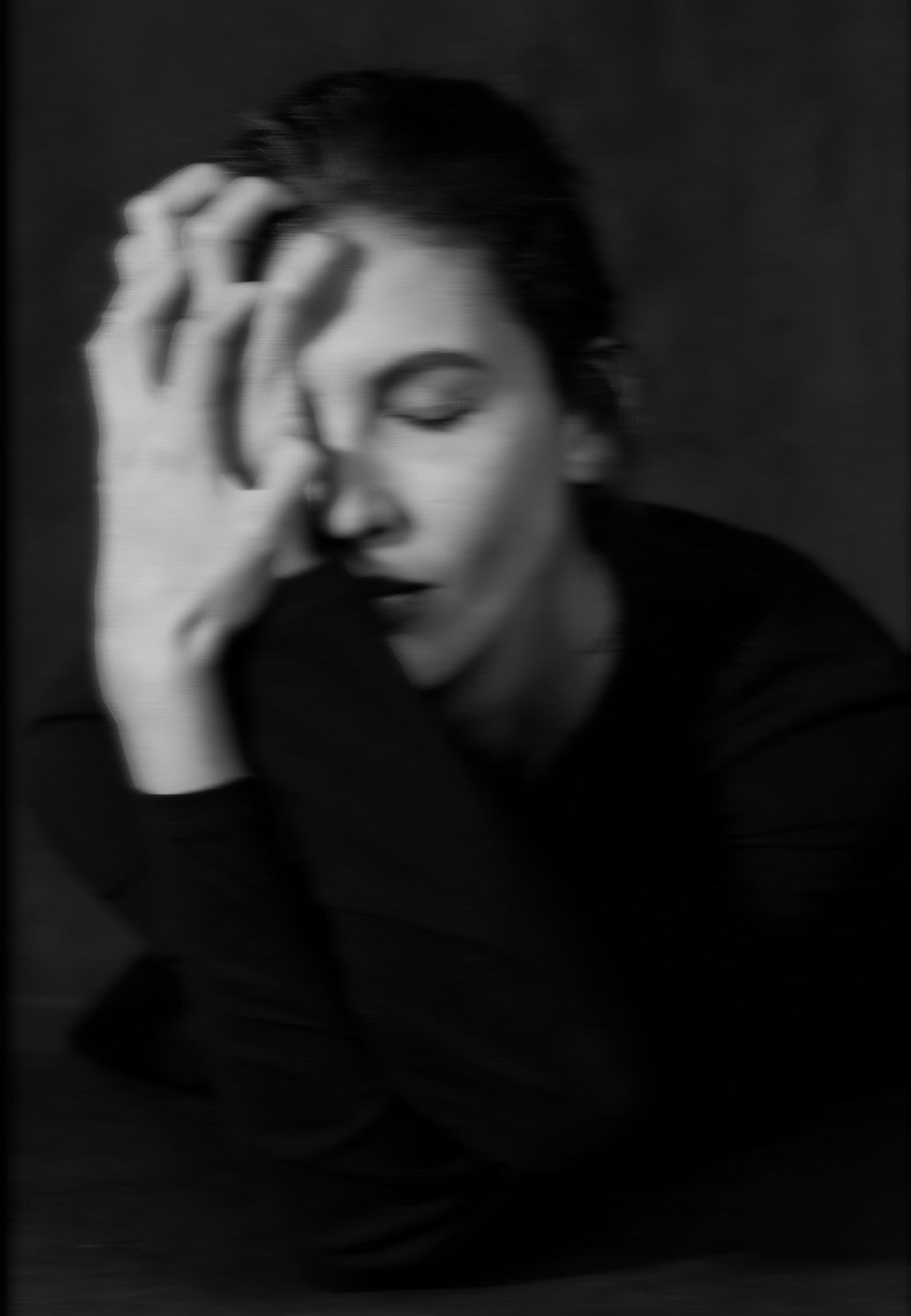
There's a certain risk in making work that's so closely tied to the subconscious. It demands a level of vulnerability, a willingness to be guided by instinct rather than intention.
Ileana Moro (b. 1992, Puntarenas, Costa Rica) is a self-taught multidisciplinary artist of Cuban and Nicaraguan heritage, raised in Costa Rica and currently based in Antwerp, Belgium. Working across painting, occasionally sculpture, drawing, writing, photography, and performance.
At the center of her work lies what she calls Las Profundidades (The Depths): a space beneath appearances where memory, longing, intuition, grief, transformation, and imagination converge. Rather than illustrating narratives, Moro creates contemplative works where meaning emerges through presence rather than explanation.
The absence of human figures in her work does not signify an absence of humanity; instead, she paints the emotional weather of being human. The storms, silences, moments of stillness, and twilight moods that pass through us all. Her canvases become psychological landscapes and quiet portals into the soul's inner climate. Drawing inspiration from the dramatic chiaroscuro of the Old Masters as well as mystical ideas surrounding the unconscious and the shadow, Moro approaches darkness not as an absence of light.
Working primarily with oil on linen, Moro builds each painting through a slow process of accumulation. Layer after layer, she covers the surface with poems, fragments of writing, drawings, imagined creatures, gestures, and memories before allowing them to disappear beneath successive veils of paint. These traces are never erased; they remain embedded within the work, carrying the memory of every decision that came before. Seen from a distance, her paintings often appear almost black, yet over time they gradually reveal deep blues, earthy browns, muted greens, and soft violets. This gradual unfolding encourages sustained looking, rewarding presence rather than immediacy.
Dedicating herself fully to visual art, Moro remains deeply interested in her ongoing concept of Destrucformation—the understanding that transformation often requires dismantling inherited structures before new forms of growth can emerge. Having lived between different countries, cultures, and emotional landscapes, she approaches uncertainty not as something to overcome but as a condition to inhabit, allowing transition itself to become a central material of her work.
Moro increasingly considers each painting an archaeological site rather than a finished image. Beneath every visible surface lies another history, where forgotten drawings, poems, gestures, and hidden forms continue to exist, shaping what is ultimately seen. This investigation has led her to explore conservation imaging capable of revealing these concealed layers.
Across all media, her work remains committed to an ongoing dialogue by honouring mystery, her work remains open-ended and emotionally resonant, creating spaces where what is unseen can still be profoundly felt.